Shrine of the Turtle Priest
Reflections
With the Lizardman army at a complete 3000 points, and Noodles 90% Party project at 90% completion, it's time for some reflecting. Some points I've learned in the last 1.5 years:
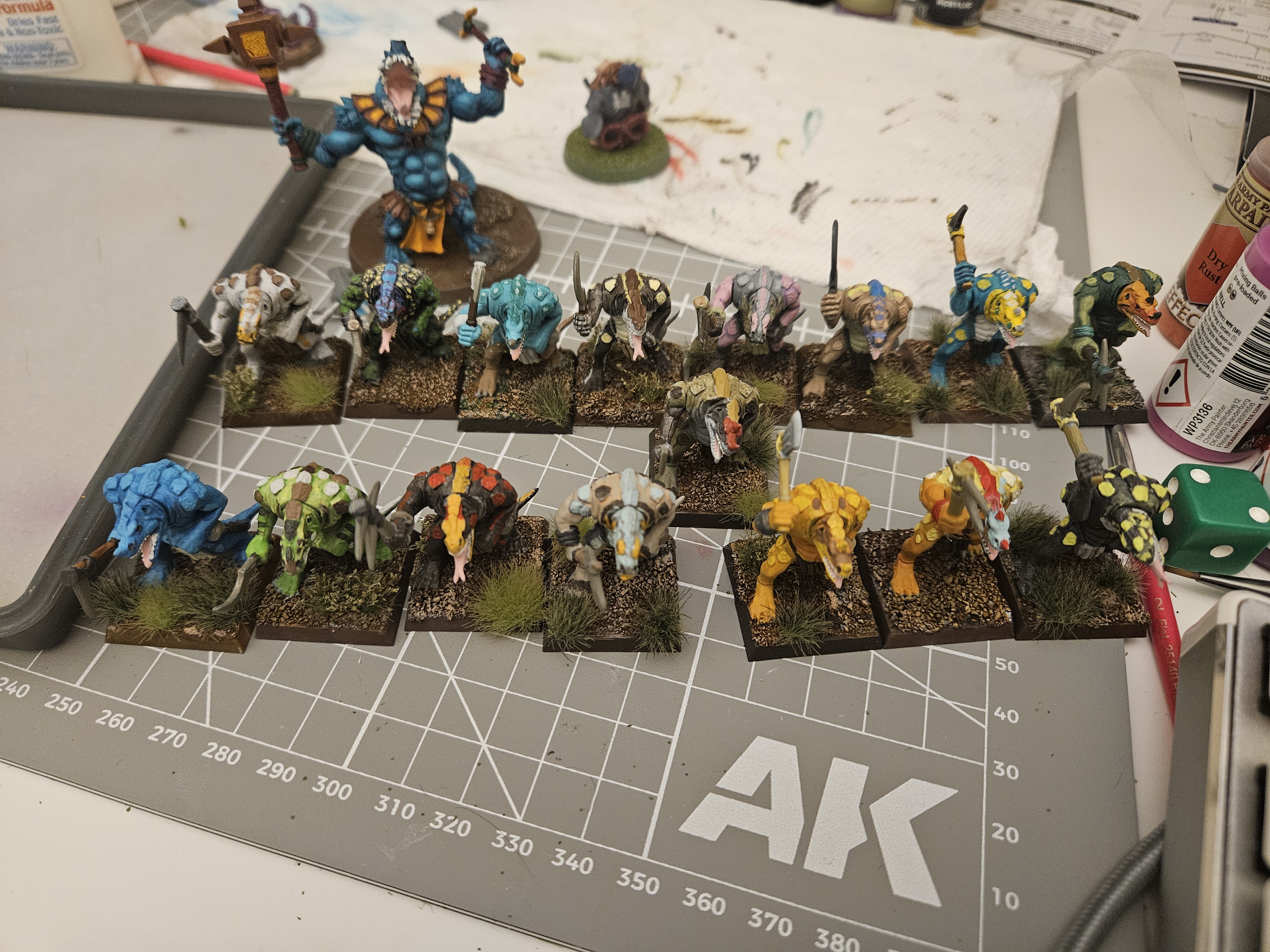
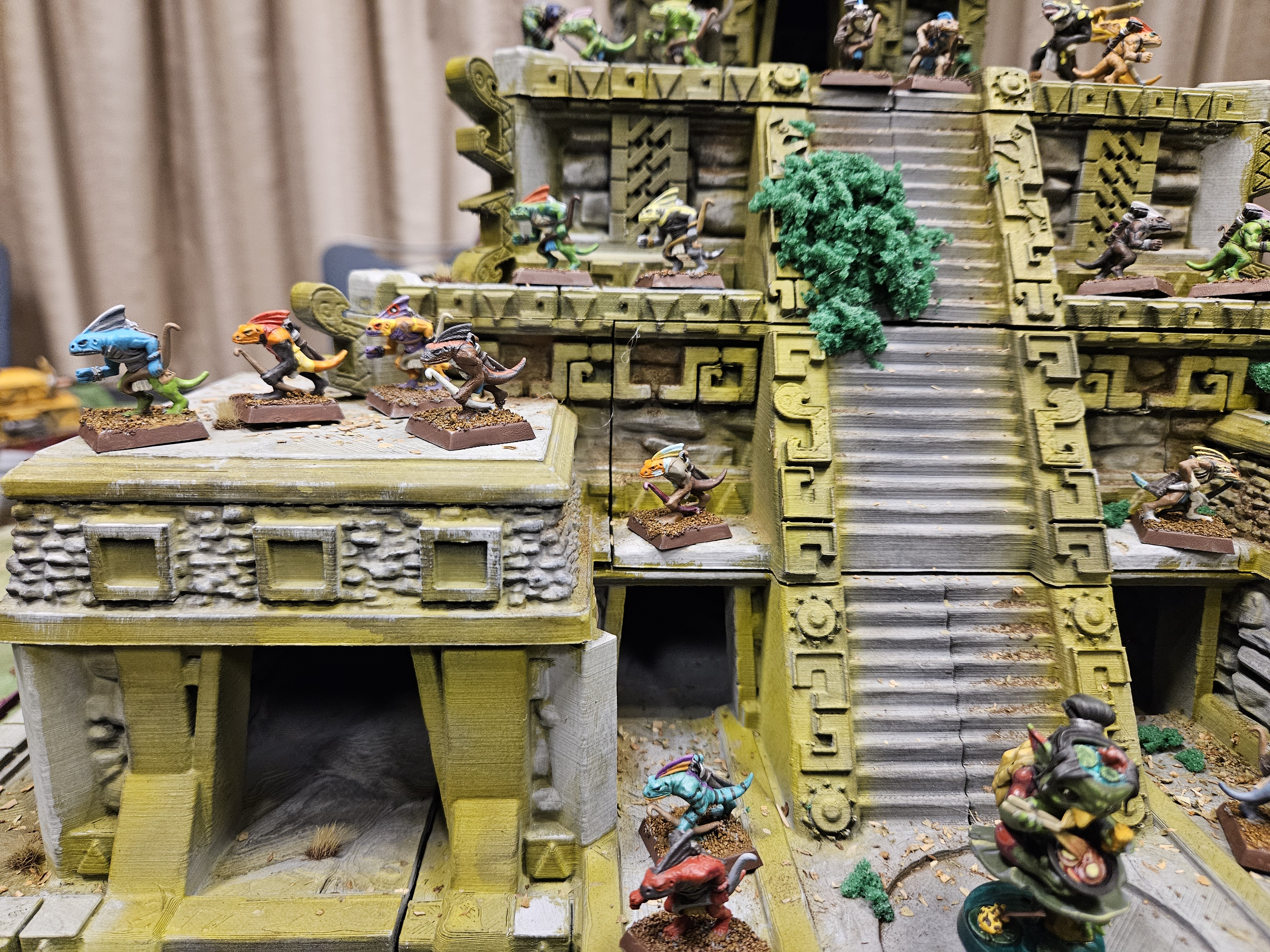
1. Painting the same miniature in different color schemes takes longer than painting them in the same color scheme.
This should be obvious, but it deserves investigating. We all know that mini painting can take a long time, but what, actually, is consuming that time? A session's length is generally owed to brush strokes, paint thinning, mixing, brush cleaning, waiting for paint to dry, etc. But on a macro scale, across a larger project (dioramas, squads, armies), there is more at play than the physical acts of painting.
Getting inspiration, conjuring motivation, researching schemes and subject history, and making big creative decisions, all consume our energy and "thinking time". This is often transparent to us and does not feel like "time spent" - after all, these are some of the most fun steps in the process, and usually, only have to be done once. (Once you have decided on red clothes and gold trim, you don't need to keep making the decision again and again!)
But it is worth recognizing that the inertia and time required to start a "new project" is spent and re-spent every time you choose a new color scheme - even when it's within the same project. Painting ~50 different styles of reptile, while not exactly the same burden as starting 50 new army projects, is still going to take much longer than a unified scheme.
One thing which surprised me - painting the individual minis (as in, the actual physical act of brush to paint to model) did not take much extra time, excepting when the individual scheme was complicated or intricate. At least for me, once I've learned a sculpt, I can paint it at a reasonably efficient pace regardless of the color scheme. I don't think I would gain much more physical painting time back by painting every single saurus as a Tongbiguan Prickleneck, instead of each as a different lizard. But it would've saved a lot of time and consternation in research, preparation, and final commitment of paint to palette.
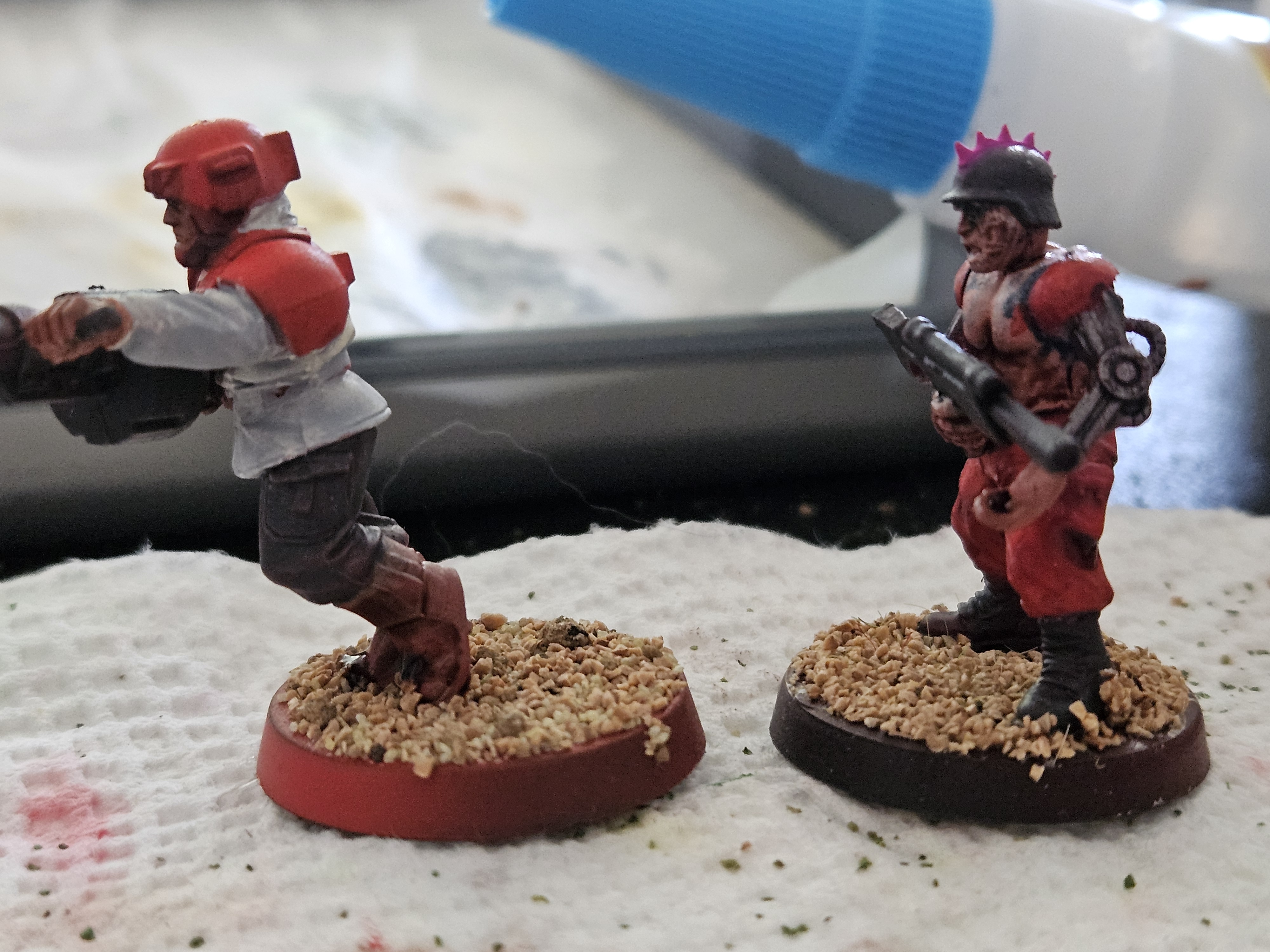
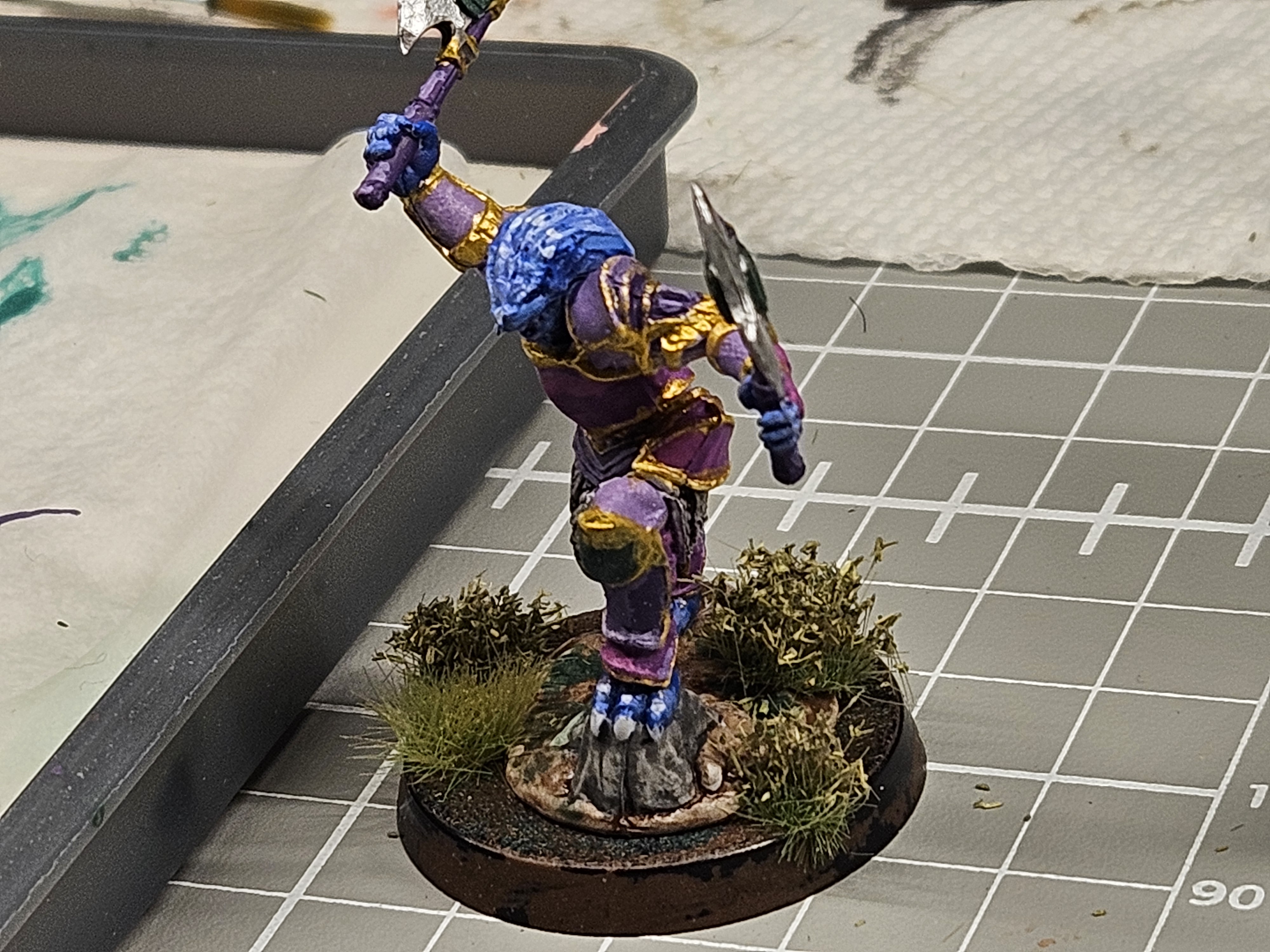
2. Restarting a half-finished project is just as hard, if not harder, than starting a new project. So, finish your projects!
I am very glad that I embarked on my 90% Party project. Frankly, a slowly growing pile of half-painted models is significantly more demoralizing than a pile of sprues and boxes. Don't start too many projects at once. I think it is healthy to have at most 2-3 active projects. That does not mean 2-3 20-man squads, but rather, 2-3 bite-size projects. An example could be:
- 1 monster under assembly
- 4 infantry in the midst of batch painting
- 1 cavalry, primed and ready to start painting
This benefits the hobbyist by giving them options to work on every time they sit down to the desk, increasing the chances that an existing project will spark inspiration and joy. The downside to this is that it makes it easy to stall out on one of the projects. Get a mini to 95% completion, but don't feel like varnishing it? You probably won't feel like varnishing tomorrow, or the next day, and the mini will sit on your desk, staring at you, making you frustrated. This downside is mostly mitigated by keeping the number of active projects low. If you can manage only a single project at a time, it might even be the best option! Regardless, just don't let it get to more than 3 projects, or else you will feel as though you've stalled out.
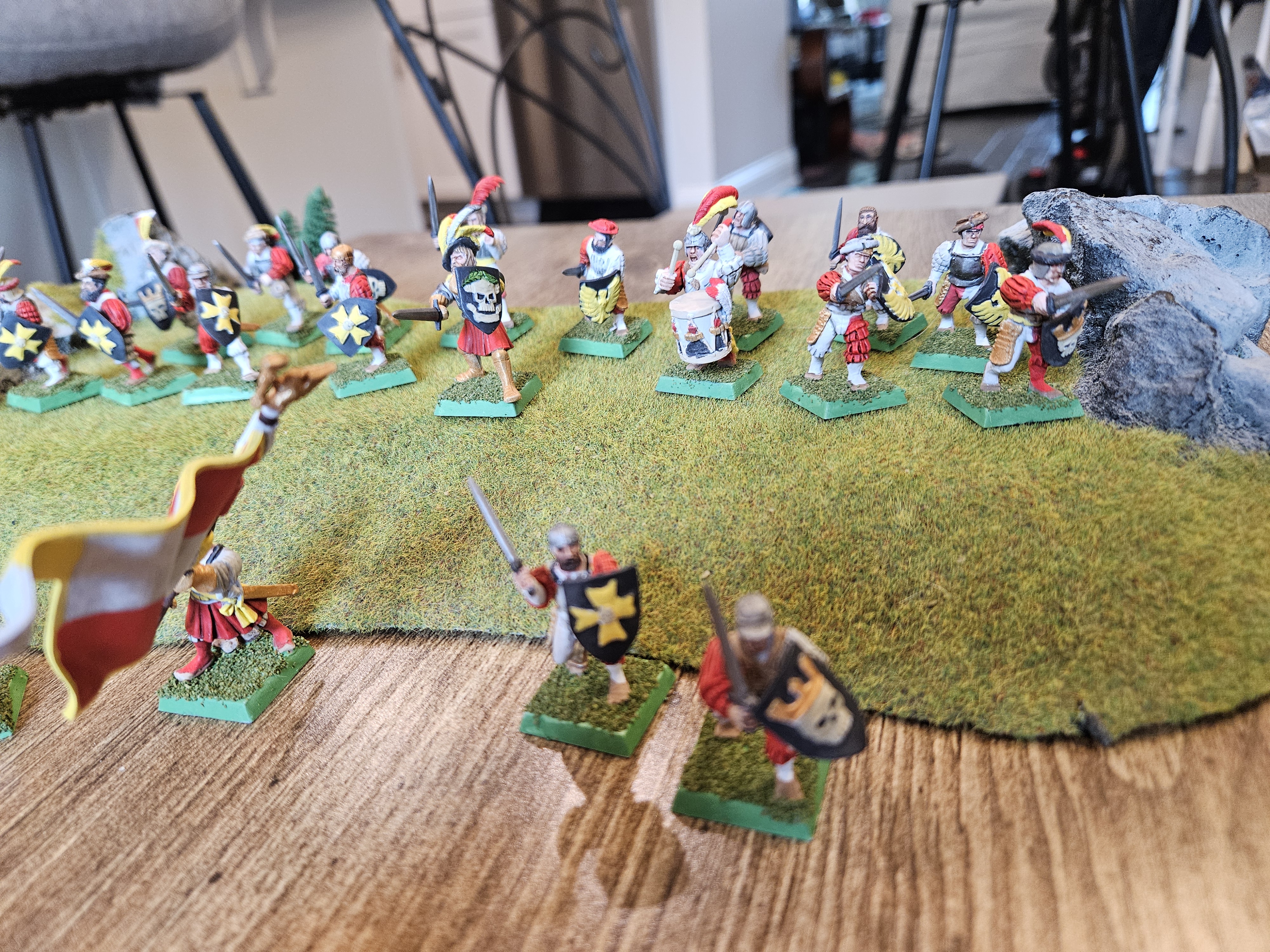
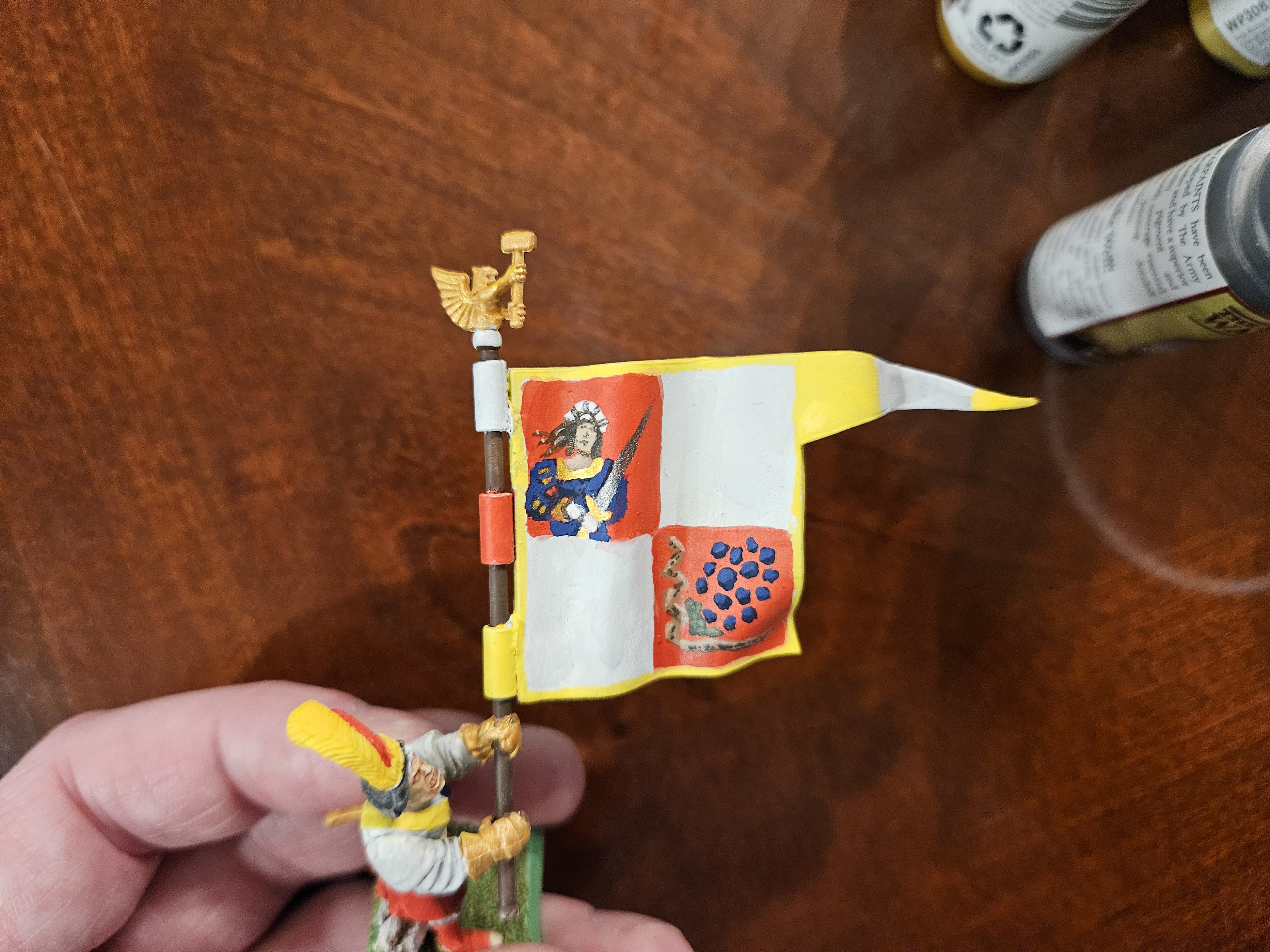
It was tough to push through a full regiment without distraction, but ever the more rewarding when it was complete!
3. Be careful with splitting focus amongst your active projects during a paint session.
In the past, I have often kept a spare mini on the table to act as "fodder" for any leftover paint. For example, I would keep an imperial guardsman sitting on the corner, so that if I ended up with too much brown or blue or red on the palette for the current active project, I could pick up that guardsman and find a bit or detail to cover with the leftover paint. My justifications were twofold: 1) Waste not want not! Don't let the paint go to waste. 2) You're earning "free progress" on a second project, and at the same time increasing color variety in that army.
There's a few problems with this approach. One is that you're not really making a creative choice for that secondary project - instead, it's just receiving leftovers. For me, this caused me to lose inspiration for those secondary pieces, made it difficult to figure out how to tie the mini together into an actually cohesive scheme, and frankly began thinking of it as just a throwaway test piece. Not good!
The other issue is that, rather than improve my throughput, I found it actually made me feel like I'm hitting a "stopping point" every time I exhaust a puddle of paint. When each color placed on the palette is supposed to be used up entirely, it means each new color choice is a longer commitment, and requires me to cover more total surface area with that paint than I'd necessarily like to. It acted as just one more roadblock to committing to another 5 minutes of painting, because I'm instead committing to 10 minutes, or more.
Now, if two active projects actually share a color - especially blacks, browns, and other common colors - I think there's nothing wrong with using the same paint puddle on multiple projects. Just don't force it!
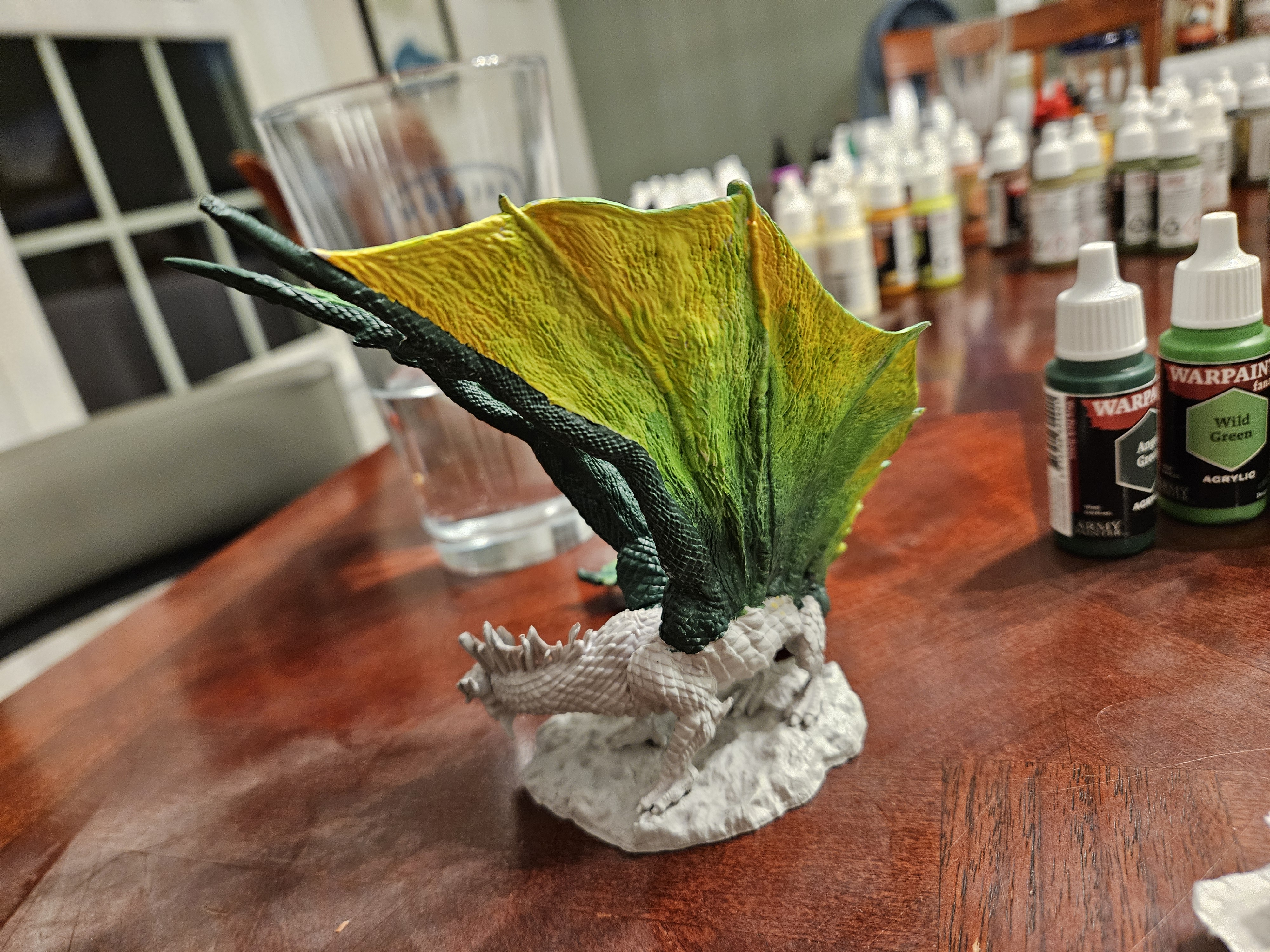
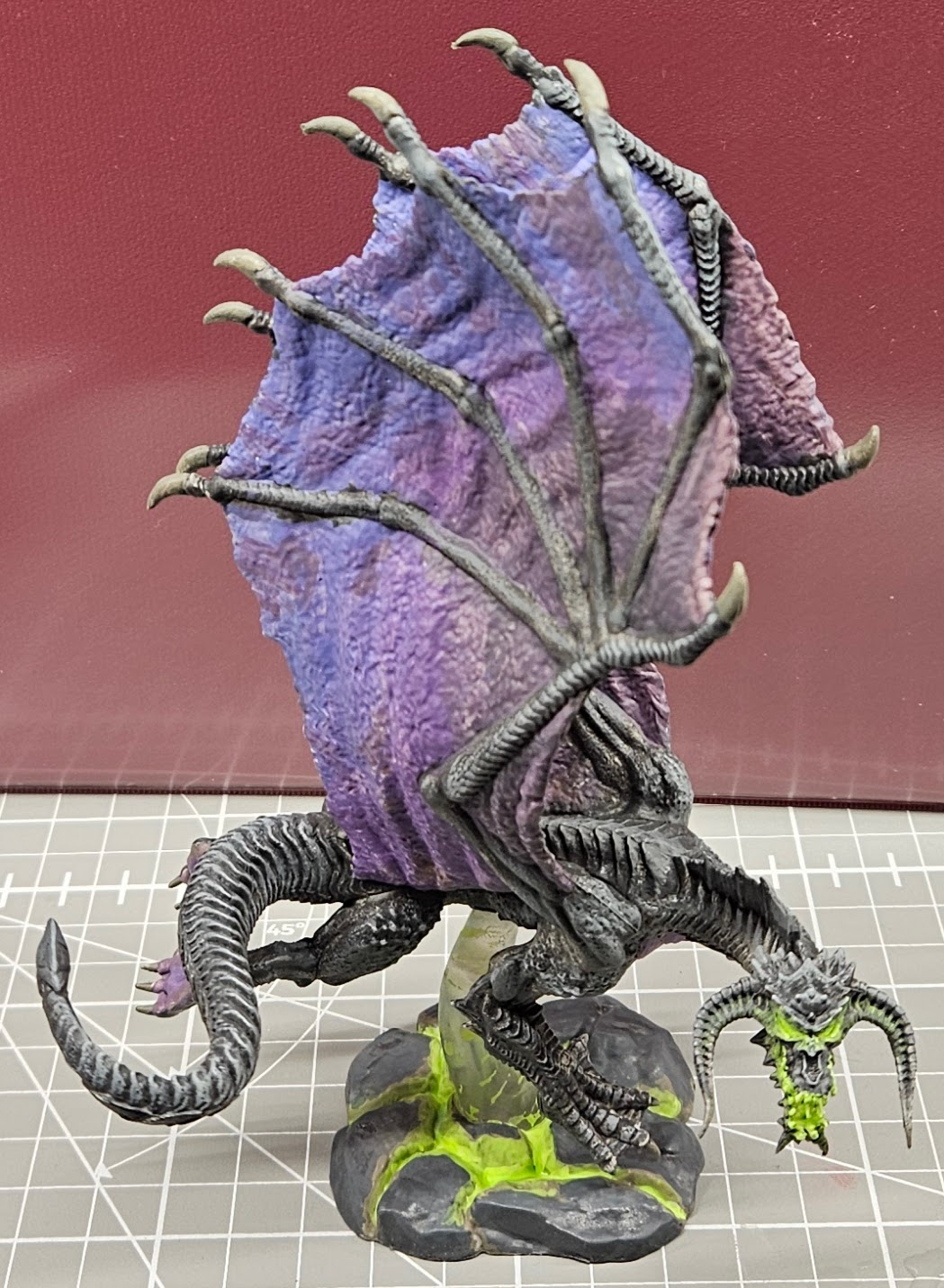
4. Tracking and logging your completed projects is satisfying and efficient, but should not bind you.
My 90% Party project included stipulations that I couldn't assemble or paint anything outside of the project. I mostly stuck to this, and I'm glad I did. However, I cheated a few times - always for an active need, an upcoming game, or a social event. When you set out on a project, you should stick to it 90%, but allowing that 10% deviation is not a bad thing, when it's for a purpose.
Keeping a log of finished projects is extremely satisfying and I highly recommend tracking completed projects in order, in a spreadsheet or website or album, etc.
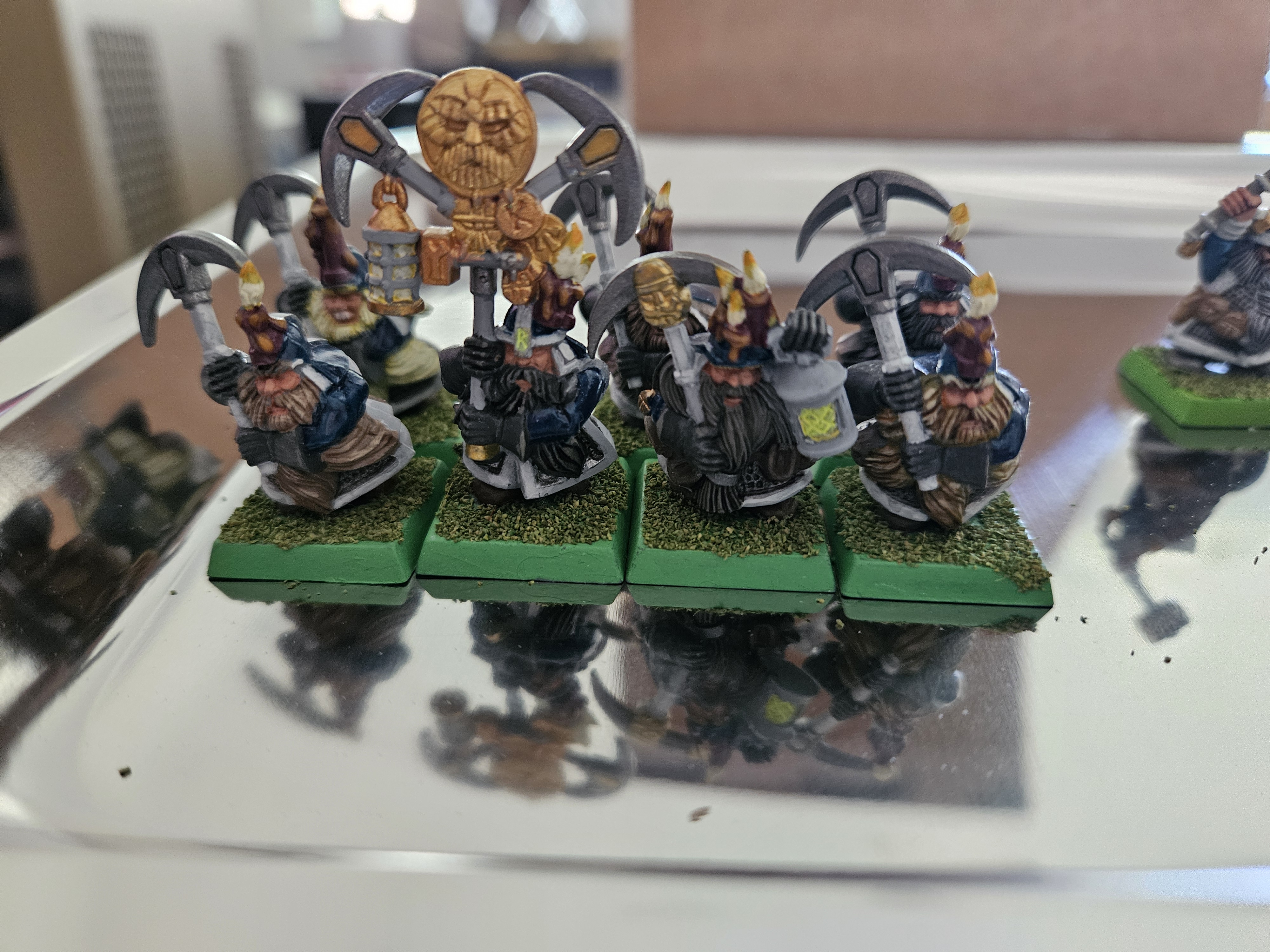
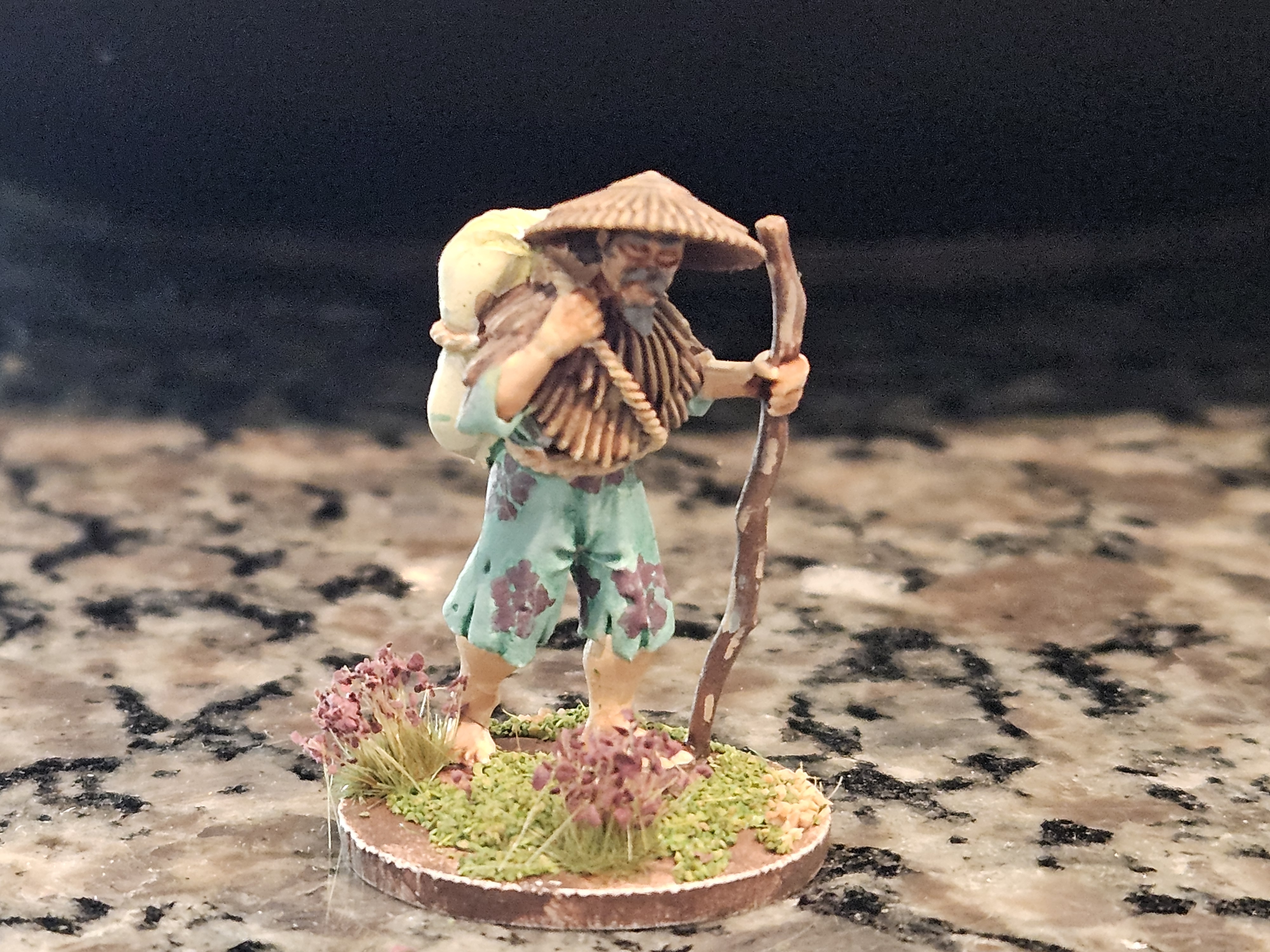
5. Finding your own, personal approach or style cannot be forced, but it will appear on its own.
I believe everyone has their own artistic style. It is mutable, it develops over time, and it does not need to be monolithic. But it will arise over time, and it's fun to start to recognize it when it does. I don't know that I can put what I believe is my style into words, yet, but I am seeing the signs. We will see what sticks and what is shed with my upcoming army project, which I expect to be stylistically very different from the lizards - but it has become clear to me that a few "key ideas" will remain in my army painting "canon":
- Significantly varied colors between individual pieces of a single project (a tendency toward towards chromatic maximalism). This is most extreme in the Lizards project, but I intend to maintain some variety of hues across all projects moving forward.
- Restraint in contrast from shadows to highlights (opposite of 'Eavy Metal). Less bright highlights, less dark shadows, when compared to the 'Eavy Metal style.
- Emphasis on consistent rank-and-file quality rather than centerpieces. While there will always be some compromise - just notice the inconsistent linework on the yellow lizard in the next section! - I prefer to take some degree of pride in each model, rather than churning them out quick.
We'll see how these points develop or recede over time!
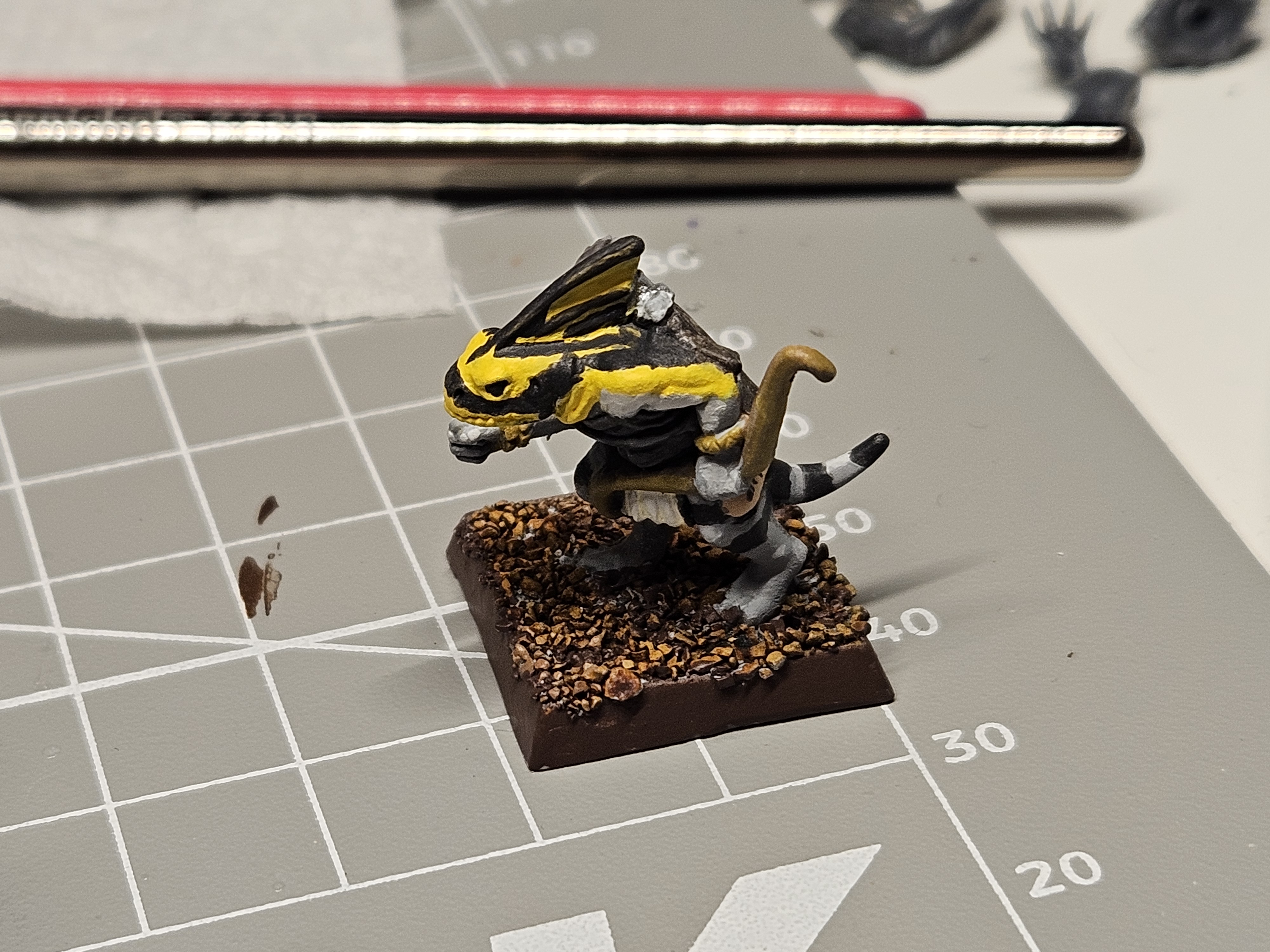
6. On the use of references for art.
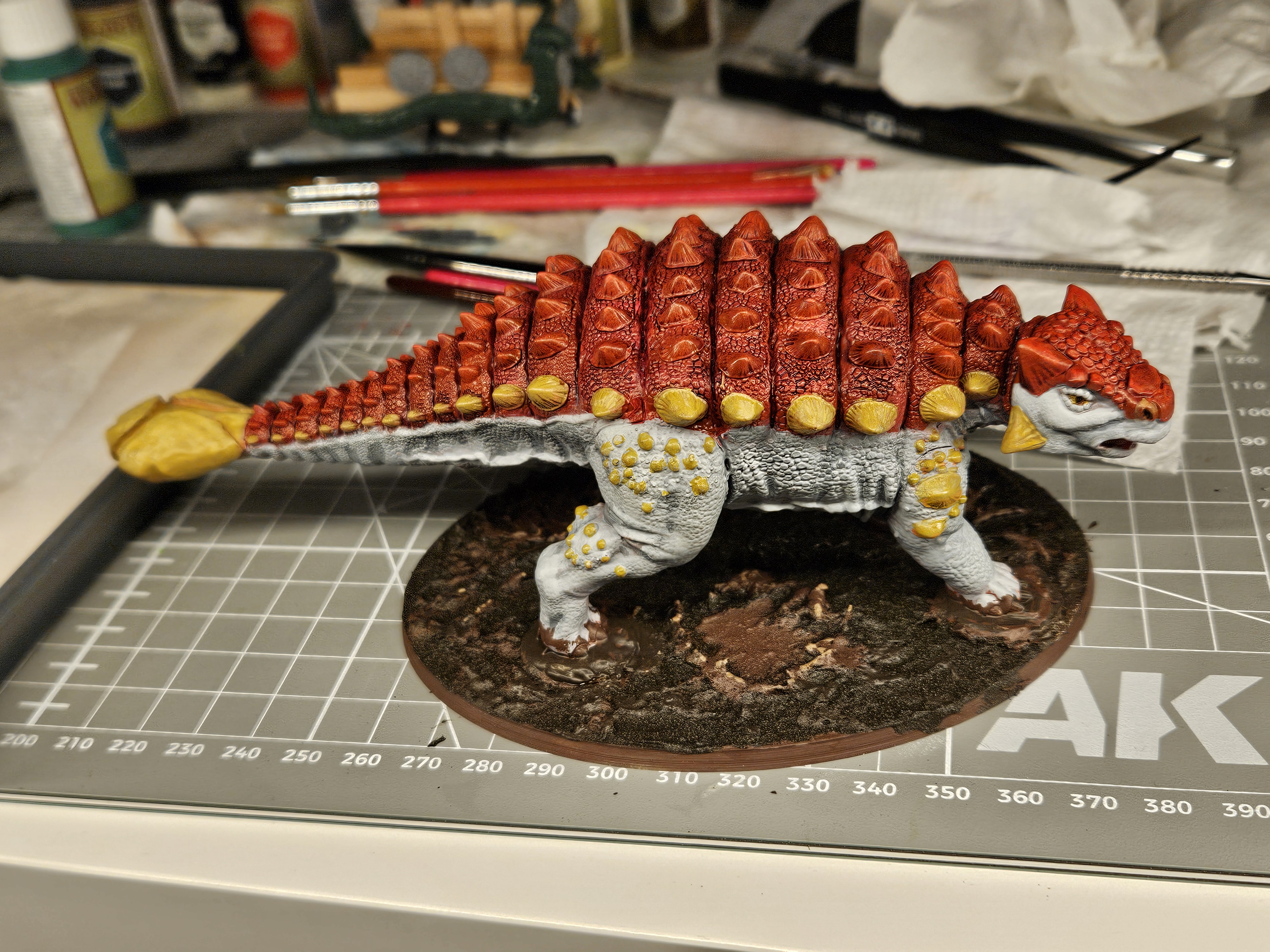
Over the last year or so, I have spent a lot of time working off models (real life lizards, a crocodile I studied in real life, and some fantasy art dragons). This has been an interesting and quite helpful practice. It's allowed me to better understand color, light, texture, and biology. Highly recommend taking inspiration from a real subject for the occasional project... But, I am excited to abandon naturalism once more and dive into more abstract and internally-generated fonts of color!
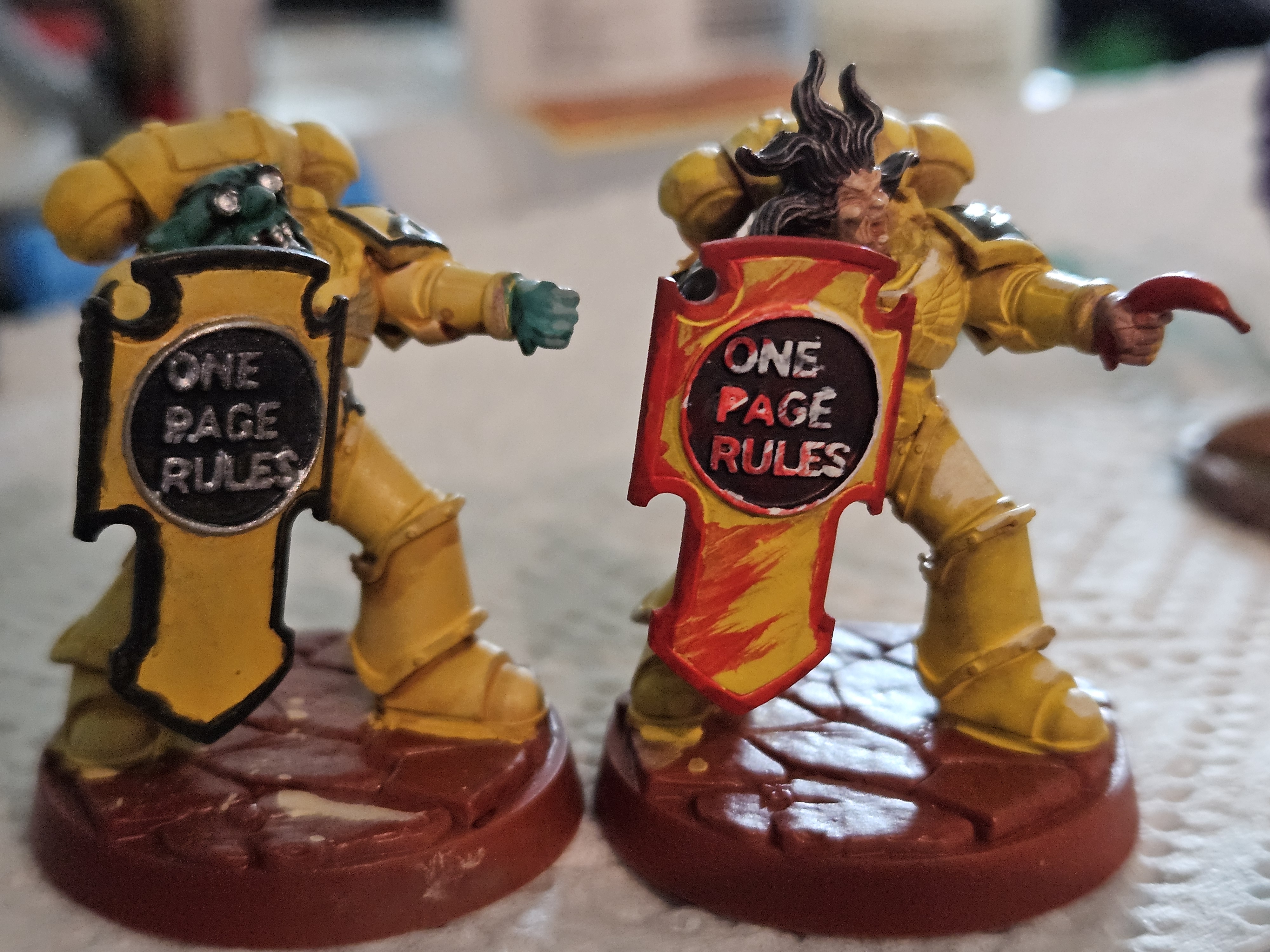
"Oy, don't forget how I came onto the scene this year!" -Wizbang
Wahoo! Bazoo!
As I look forward to my new army (which I've already started before completing the 90% Party - whoops!), I'm excited to see what sticks. One thing I do know - after experiencing the joys of the reptile cult, I am unlikely to ever paint an army with a simple and unified color scheme again in my life. Well, except for sometimes when I do :) It's just too much fun to dive into way too much color! Stay tuned for further updates.